Northern Lights in Svalbard 2026-2027: Season, Odds and the Midday Aurora
Svalbard's aurora claim is not that you will see more of it. It is that you can see it over lunch.
 Verified by Lars Hansen, Norway tour specialist covering Arctic Norway and Svalbard
Short answer
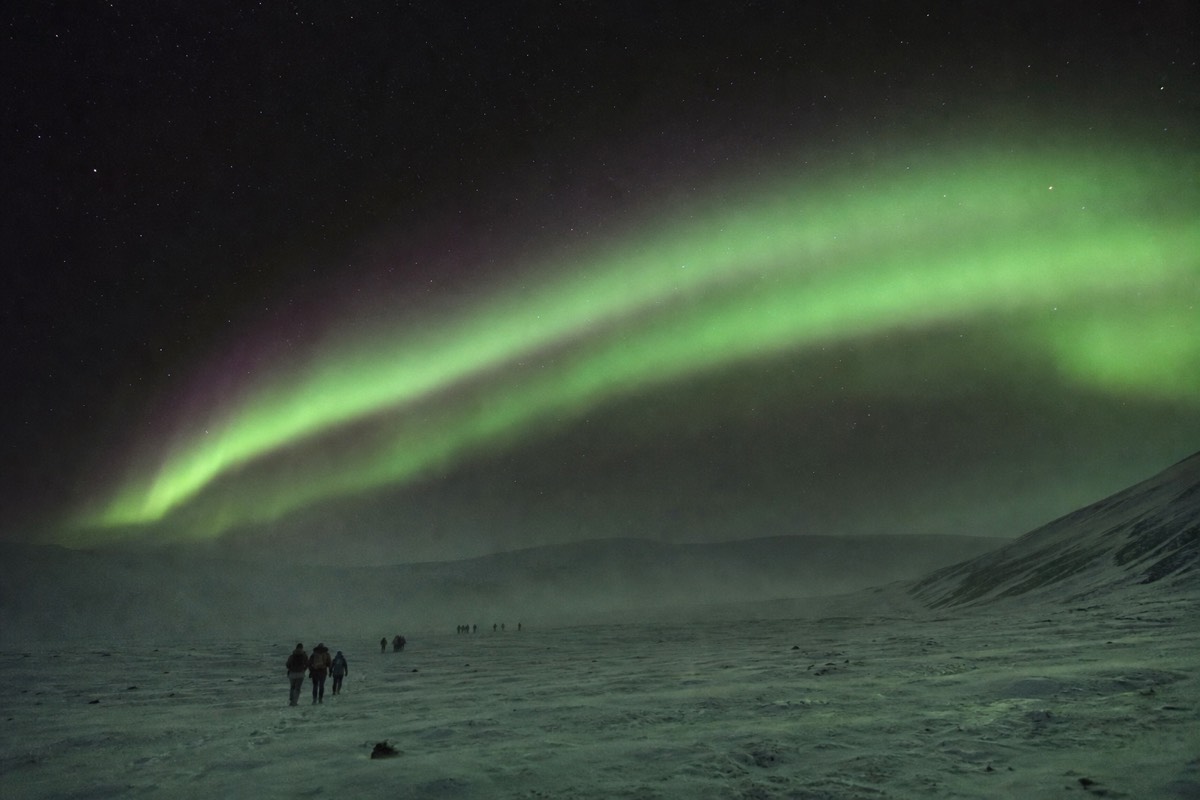
The aurora season at Longyearbyen runs roughly late October to mid-February, peaking during the polar night from 11 November to about 29 January when the lights can appear at any hour, including midday. Five real tours hunt it, from $205 by car to $263 by snowmobile. Svalbard sits slightly north of the strongest part of the auroral oval, so it is the most unusual place to see the aurora rather than the most reliable.
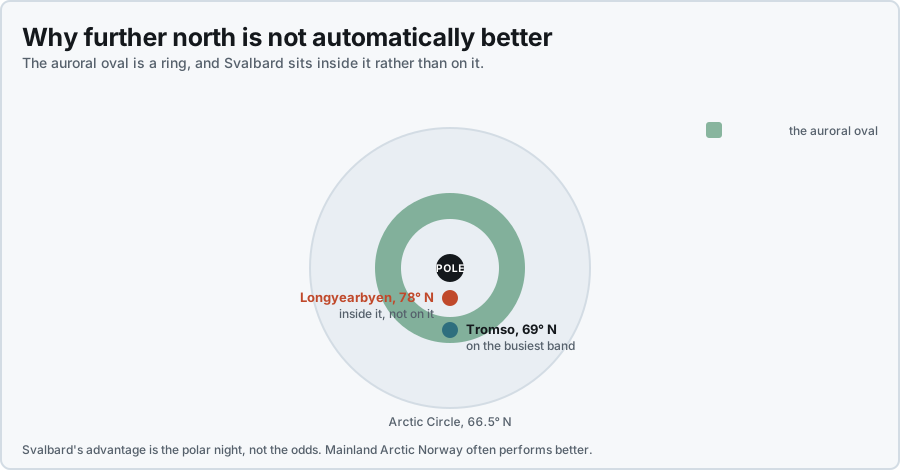
The auroral oval is a ring, not a cap. That geometry is the single fact that explains everything odd about seeing the northern lights in Svalbard, including why a place this far north is not automatically the best place to watch them.
Longyearbyen sits at 78.22 degrees north, which puts it slightly beyond the ring's most active band on an ordinary night. What it gains in exchange is something nowhere else has.
When can you see the northern lights in Svalbard?
Roughly late October to mid-February. The peak is the polar night itself, from about 11 November to 29 January, when the sun never rises and the aurora can appear at any hour of the day or night. From 20 April to 22 August there is midnight sun and no darkness at all, so no aurora tour operates.
The season is bounded by light rather than by solar activity, and the exact dates come from Visit Svalbard's published season definitions for Longyearbyen. The lights are up there year-round; you simply cannot see them against a lit sky.
| Period | Aurora visible? | Notes |
|---|---|---|
| Late October | Yes, from late in the month | Dark evenings return, tours restart |
| 11 Nov to 29 Jan | Yes, at any hour | Polar night. The daytime aurora window. |
| February | Yes, fading through the month | Long blue-hour twilight starts competing |
| March | Rarely | Daylight is back too far |
| 20 Apr to 22 Aug | No | Midnight sun. Nothing to see against. |
| September | Occasionally, late in the month | First real nights return, and boats still run |
Late September is the only window where an aurora sighting and a working boat season overlap, which makes it a quietly good time to visit if you want variety over intensity.
Why does the aurora appear at midday in Svalbard?
Because during polar night there is no daylight to hide it. A display at eleven in the morning is simply a display. Svalbard also sits far enough north to catch dayside cusp aurora, a genuinely different phenomenon from the evening displays seen further south, which is why researchers run observatories here specifically.
This is the whole case for choosing Svalbard over mainland Norway for an aurora trip. Everywhere else, the northern lights are something you stay up for. Here they can interrupt your walk to the museum.
The trade-off is honest and worth stating: on an average clear night, Tromso or the Lofoten Islands sit closer to the strongest part of the oval and often perform better.
| Svalbard (Longyearbyen) | Mainland Arctic Norway (Tromso) | |
|---|---|---|
| Position vs the auroral oval | Slightly north of the most active band | Close to the centre of it |
| Typical frequency on a clear night | Good, but not the best odds | Better odds |
| Daytime aurora | Yes, during polar night | No |
| Landscape | No trees, no competing light, mountains and fjord | Trees, more settlement light |
| Season length | Late Oct to mid-Feb | Late Sep to early Apr |
| Cost of getting there | Higher | Lower |
Which northern lights tour should you book?
The four-hour photography tour by car is the most reviewed in this category at 4.6 across 36 reviews, from about $205, and the guide sets your camera up for you. If you want your own vehicle and route, the private chase is around $233. The snowmobile version at $263 turns the ride itself into half the experience.
| Option | Time | From-price | What it adds |
|---|---|---|---|
| Photography tour by car | 4 hours | $205 | A guide who knows the dark spots and can work your camera |
| Private chase by car | 3 hours | $233 | Route follows the sky rather than a group schedule |
| Aurora by snowmobile | 2.5 hours | $263 | Distance from town lights, and a ride worth having anyway |
| Private snowcat chase (Viator) | 2 hours | On the listing | Your own tracked vehicle and driver, out beyond the road lights |
The snowcat chase is the only Viator-exclusive product in the category and the most weatherproof way to wait a display out, since a tracked vehicle with your own driver stays out as long as the sky is worth watching: check the evening and its dates here. Everything else lives or dies on cloud. The full set, with real ratings, is on the northern lights tours page, and if the photography tour is the one you want you can check live availability and prices on GetYourGuide directly.
How many nights should you allow?
At least three. The lights are unpredictable and Arctic cloud is not, so a single-night attempt is a coin toss. Three nights in Longyearbyen during the dark season gives you a reasonable run at it, and there is plenty to fill the days between.
Because almost every listing cancels free, the sensible approach is to book two separate evenings on arrival and drop one if the first delivers. It costs nothing and removes the single biggest source of aurora disappointment, which is having exactly one attempt.
What should you wear and bring?
More than you think, because you stand still. Operators supply a thermal outer layer on most tours, but feet and hands are the failure points after forty minutes of not moving. Wool base layers, thick socks, insulated boots, liner gloves under mitts, and something over your face.
Check the cloud forecast on the day with the Norwegian Meteorological Institute's Longyearbyen page, because cloud rather than solar activity is what decides most evenings. For photography: a tripod is not optional, spare batteries kept in an inside pocket are essential because cold drains them fast, and you should bag the camera before carrying it into a warm building or condensation will fog everything. A phone will capture something on a strong night; a camera you can set to a long exposure will capture what you actually saw.
The full kit list is in the packing guide, and if the light rather than the aurora is what interests you, the photography tours cover both extremes of the Svalbard year.
What camera settings actually work for the aurora?
A tripod, a wide lens at its widest aperture, a high ISO and an exposure of a few seconds to start, then adjust. The single biggest failure is a phone handheld: the aurora is faint and moving, so anything without a steady base and a long exposure records a green smudge or nothing. The photography tours on this site exist partly because the guide sets this up for you.
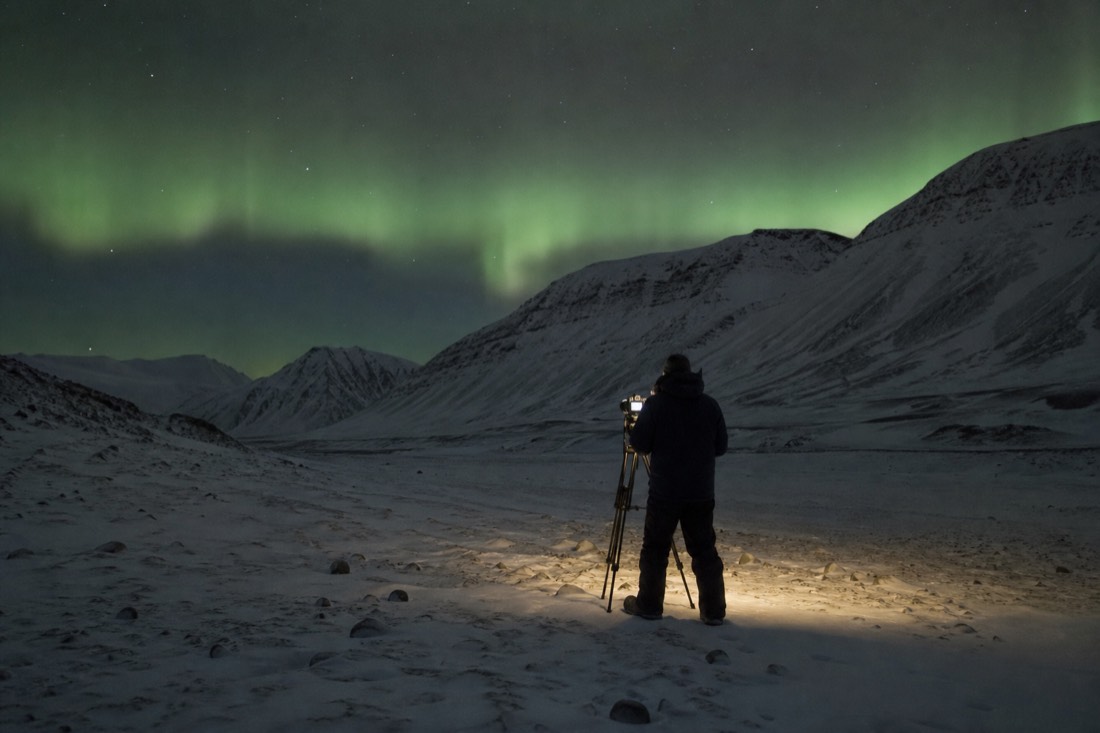
The settings below are a starting point, not a rule, because a strong display and a faint one need different exposures. The point is to begin somewhere sensible and adjust from the back of the camera.
| Setting | Starting point | Why |
|---|---|---|
| Support | Tripod, always | Multi-second exposures are impossible handheld |
| Aperture | The widest your lens has (low f-number) | The aurora is faint; gather all the light you can |
| ISO | 1600 to 3200 | High enough to catch it, low enough to limit noise |
| Shutter | 3 to 10 seconds | Longer smears the aurora's structure; adjust to the display |
| Focus | Manual, on a bright star or distant light | Autofocus hunts uselessly in the dark |
| Batteries | Spares in an inside pocket | Cold flattens them within an hour |
A phone with a dedicated night mode and a small tripod will get something on a strong night. For the picture you actually pictured, a camera you can set manually is the difference, which is what the guided photography tours provide.
How do you read an aurora forecast?
Two numbers matter: the Kp index, which estimates how far south the aurora reaches, and the local cloud forecast, which decides whether you see it at all. At Svalbard's latitude even a low Kp can deliver, because you sit under the auroral oval already, so cloud is the bigger enemy than solar activity. A clear sky at Kp 2 beats a clouded one at Kp 6.
Forecasting the aurora is really forecasting two independent things, and travellers over-weight the space-weather number while under-weighting the ordinary one.
| Factor | What it tells you | How much it matters at 78 north |
|---|---|---|
| Kp index | How active the aurora is, how far south it reaches | Less than you think; you are already far north |
| Cloud cover | Whether you can see the sky at all | The dominant factor by a wide margin |
| Moon phase | How much competing light there is | Minor; a bright display beats moonlight |
| Local darkness | Whether it is dark enough at all | Absolute: no darkness, no aurora, April to August |
This is why guides drive. A tour that can move between valleys is chasing gaps in the cloud, not chasing a higher Kp, and that mobility is most of what you are paying for on a guided chase.
Where do the guides actually take you?
Out of Longyearbyen's light and into the dark valleys, most often up Adventdalen past the Global Seed Vault towards Mine 3, or wherever the cloud is thinnest that night. The route is not fixed; a good guide is reading the sky and the forecast in real time and choosing the darkest clear spot they can reach.
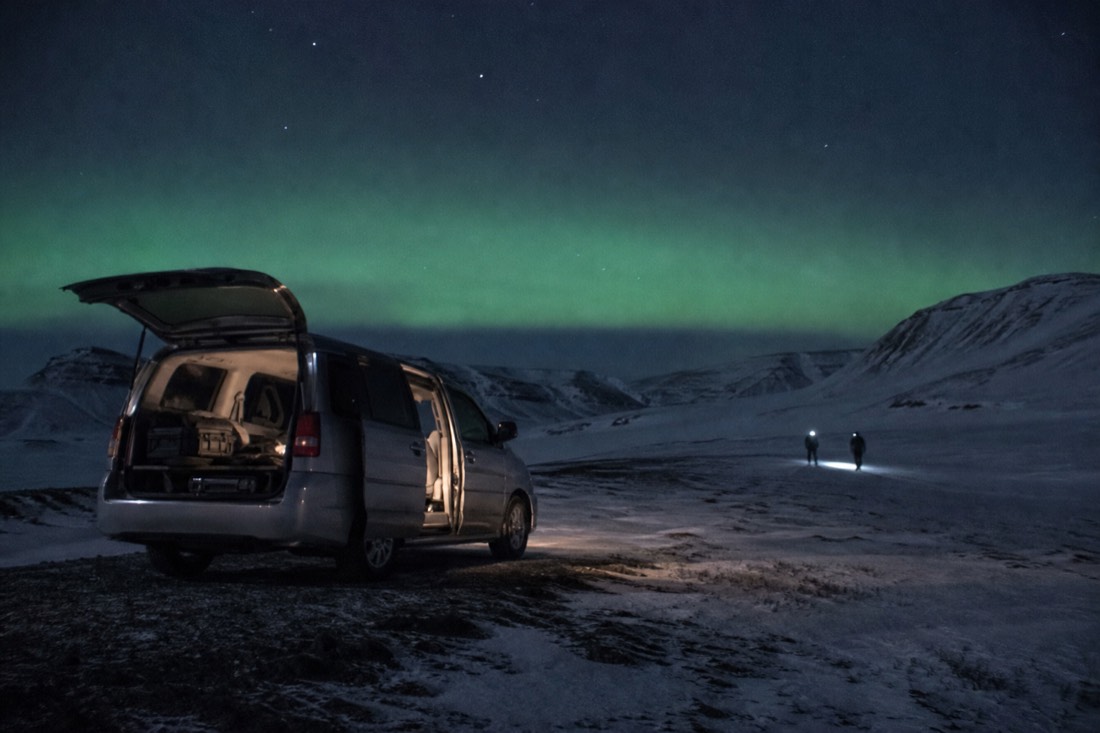
Knowing the geography helps you understand what the guided tour buys over standing outside your hotel.
| Location | Distance from town | Why guides go there |
|---|---|---|
| Adventdalen valley | Just outside town | Dark quickly, away from streetlights |
| Near the Global Seed Vault | A few km | Elevated, open sky, a landmark foreground |
| Towards Mine 3 | Further up the valley | Darker still, industrial foreground for photos |
| Wherever the cloud breaks | Variable | The real decision on any given night |
Standing in town on a strong night can work, and residents photograph the lights from their doorsteps. What the tour adds is distance from the streetlights, a guide watching conditions, and the mobility to follow a clear patch of sky. On a weak display that difference decides whether you see anything.
What Lars tells people chasing the aurora
Give it three nights, not one, and judge the trip on the whole run rather than a single evening. The aurora is unpredictable and Svalbard's real advantage is the daytime version during polar night, not a higher hit rate than mainland Norway. Come for the extraordinary, not the guaranteed, and book more than one evening so cloud does not sink the whole trip.
Lars is careful that he verifies the season dates and the listings rather than claiming aurora nights of his own. The pattern he points to in the reviews is consistent: the happy travellers booked multiple evenings and understood the odds, and the disappointed ones bet everything on one night and lost to cloud.
His practical points, drawn from how these listings actually perform:
- Book two or three evenings. Cancellation is free on most, so a spare booking is cheap insurance against cloud.
- Do not come to Svalbard only for the aurora. For pure odds, mainland Arctic Norway sits closer to the oval's strongest band.
- Come for the daytime aurora of polar night. That is the thing nowhere else offers, and it is genuinely worth the trip.
- Dress for standing still. Aurora tours are the coldest kind because you are stationary for long stretches, as the packing guide covers.
Common questions about the Svalbard aurora
Is Svalbard better than Tromso for northern lights?
Not statistically. Svalbard sits slightly north of the strongest part of the auroral oval, so on a typical clear night mainland Arctic Norway performs better and has a longer season. Svalbard's advantages are the daytime aurora during polar night and a landscape with no trees and no competing light. It is the more remarkable trip, not the higher-probability one.
Can you see the northern lights from Longyearbyen town?
Yes, on a strong night, and residents photograph them from their doorsteps constantly. What a tour buys you is distance from the streetlights, a guide watching the conditions, and transport to whichever valley is clear. On a weak display that difference decides whether you see anything at all.
What are the chances of seeing the aurora on a three-night trip?
Nobody can put an honest number on it, and be sceptical of any site that does. It depends on solar activity, which is unpredictable, and cloud cover, which dominates the outcome. What is safe to say is that three nights is meaningfully better than one, and that booking two guided evenings rather than one roughly doubles your attempts for a cost that is refundable.
Do any tours guarantee northern lights?
None of the five Svalbard listings does, and any operator anywhere promising a sighting is promising something outside their control. Some mainland operators offer a free repeat if nothing appears; in Svalbard the norm is simply honest framing on the listing. That honesty is a good sign, not a weak one.
Is February too late for the aurora in Svalbard?
Early February is still good and is the sweet spot if you also want snowmobiles, since the winter programme is running by then. By late February the returning daylight and the long blue hour start to compete, and by March it is effectively over. The season table shows exactly where the two seasons overlap.
Plan your tour
Book more than one aurora evening
Initial editorial choice, not a personalized eligibility check. Confirm the operator’s full requirements before booking.
Choose your aurora evenings
This screens only the season, the time window and the pick you choose, using each listing’s published duration and season. Health, fitness, language, licence and every remaining requirement still need operator confirmation, and travel to the meeting point is not included in the durations.
- Northern lights photography tour: A guide who reads the cloud and drives to the clear gap, with camera help so the night produces photographs, not just memories. 4 hours Roughly four evening hours in the dark and cold; sightings depend on solar activity and cloud.
- Private northern lights chase by car: Your own car and guide chasing the clearest sky, with the flexibility to move or cut the night short. 3 hours Private pricing at around $233 for the car, not per person.
- Private northern lights snowmobile tour: Chase the aurora by snowmobile in a private group, away from the road corridors. 2.5 hours A car licence is required to drive; winter night temperatures apply.
Northern lights photography tour
Have your travel date in mind? Check it before arranging the rest of your day. A guide who reads the cloud and drives to the clear gap, with camera help so the night produces photographs, not just memories.
4 hours
Roughly four evening hours in the dark and cold; sightings depend on solar activity and cloud.
Check your date on GetYourGuide