Svalbard Wildlife: What You Can Realistically See
The reindeer will walk past you. The fox might. The bear will not, and it is worth knowing which is which before you book.
 Verified by Lars Hansen, Norway tour specialist covering Arctic Norway and Svalbard
Short answer
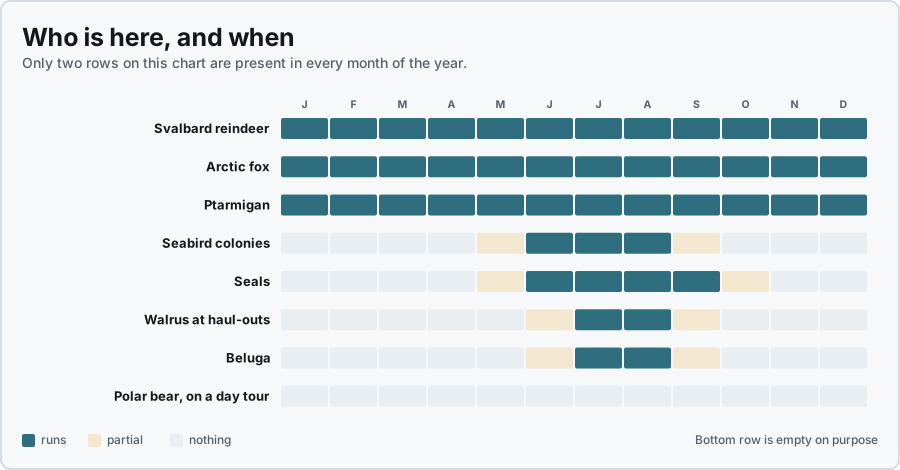
Svalbard reindeer are close to certain on any guided trip, because they graze at the edge of Longyearbyen and have almost no fear of people. Arctic fox is a realistic maybe. From late May to mid-August the seabird cliffs hold tens of thousands of birds. From the water, seals are likely and beluga and walrus are both possible. Polar bears are not realistic on a day tour.
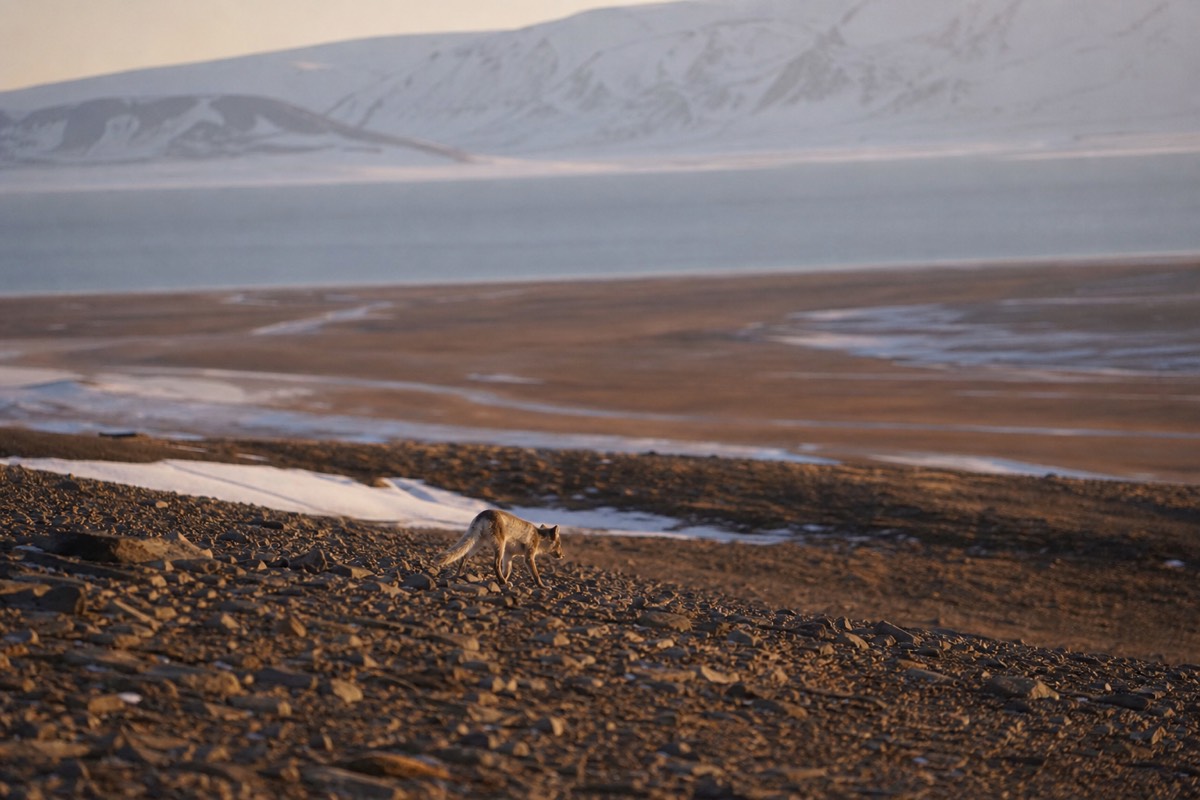
There are no trees in Svalbard, which changes wildlife watching completely. Nothing is hidden and nothing is close. You see a shape a kilometre away on a scree slope, and only through binoculars does it resolve into an Arctic fox in summer coat. The most useful thing you can pack for this is not a camera. It is optics.
What wildlife can you see in Svalbard?
Svalbard reindeer are close to certain year-round, because they graze at the edge of Longyearbyen and barely react to people. Arctic fox is a realistic maybe. From late May to mid-August the seabird cliffs are extraordinary. From a boat, seals are likely, and beluga and walrus both genuinely possible. Polar bears are not realistic on a day tour.
| Species | Realistic on a day tour | Best season | Where | Legal minimum distance |
|---|---|---|---|---|
| Svalbard reindeer | Very likely | Year-round | Adventdalen, Bjorndalen, the town edge | No fixed distance, but do not approach or feed |
| Arctic fox | Possible | Year-round, white in winter | Valley sides, near bird cliffs | Do not approach |
| Ptarmigan | Possible | Year-round, the only bird that overwinters | Valley floors | |
| Guillemot, kittiwake, puffin | Very likely in season | Late May to mid-Aug | Fuglefjella and other cliffs | 500 m for drones, 1 Apr to 31 Aug |
| Barnacle and pink-footed goose | Likely in summer | May to Sep | Tundra near town | |
| Ringed and bearded seal | Likely from a boat | Summer on water, year-round on ice | Isfjorden, glacier fronts | |
| Walrus | Possible, at haul-outs | Summer | Specific beaches, mostly by boat | 500 m |
| Beluga whale | Possible on longer crossings | Summer | Isfjorden, near glacier outflows | |
| Polar bear | No, not on a day tour | Follows the sea ice | Remote fjords, the ice edge | 300 m, or 500 m from 1 Mar to 30 Jun |
The walrus and polar bear distances come from the environmental rules that took effect on 1 January 2025, and they are enforced.
Why are Svalbard reindeer so small?
They are a distinct subspecies isolated here for thousands of years, with short legs, a stocky build and no large land predator to outrun. That last part is why they let you walk past. They also change shape dramatically with the season, putting on enormous fat reserves before winter.
By September a Svalbard reindeer looks close to spherical. By May, having spent the winter digging through snow for whatever it can find, the same animal looks gaunt. It is the same creature, and the transformation is one of the more startling things about visiting at different times of year.
They are genuinely everywhere. Visitors are routinely surprised to find one grazing between houses at the edge of town, entirely unbothered. That is not tameness, it is the absence of anything that has ever chased them.
When are the seabird cliffs at their best?
Late May to mid-August, and at their peak in late June and July. Colonies like Fuglefjella hold tens of thousands of guillemots and kittiwakes, and the noise and smell are as much a part of it as the sight. By late August most have left and the cliffs go quiet almost overnight.
This is the single most reliable wildlife spectacle in Svalbard and the one visitors most often overlook while hoping for something with fur. A full cliff in July is genuinely overwhelming.
| Month | Bird cliffs | Notes |
|---|---|---|
| April | Arriving | First birds return, colonies filling |
| May | Filling fast | Late May is when it becomes worth a dedicated trip |
| June | Peak | Full colonies, chicks hatching |
| July | Peak | The best month. Everything is noisy. |
| August | Emptying | Chicks fledge, cliffs quieten through the month |
| September to March | Empty | Only ptarmigan overwinter on land |
Cliff-season days book around the birds, not the other way round: the five-hour wildlife safari and slow-hiking photography tour is the walking route to the colonies, and its calendar empties for the year almost as fast as the cliffs do. Check its dates here if late June or July is your window, because the colonies empty by late August. There are shorter wildlife days from Longyearbyen too. Both sit on the wildlife tours page.
Which tour gives the best wildlife chance?
A boat, if you want marine mammals, because seals, walrus haul-outs and beluga are all water-based. A guided land day, if you want reindeer, fox and the cliffs. The wildlife and polar plunge trip at 4.9 across 7 reviews is the best-rated wildlife listing and combines the two.
One of its reviewers, Tamalika from India in July 2026, wrote the honest version: "We were lucky to spot walrus, beluga whales and seals in the ocean, many reindeers and Arctic goose and ptarmigan bird. We couldn't spot the Arctic fox but that's okay, we saw many animals." Several species, one miss, and a good day. That is what to expect. You can check live availability and prices on GetYourGuide if that is the shape of day you want.
| If you want | Book | Why |
|---|---|---|
| Reindeer and fox | Any guided land day | Reindeer are near-certain on all of them |
| Seabird cliffs | A summer walking or boat trip to a colony | Late May to mid-August only |
| Seals, beluga, walrus | A boat tour | These are all water-based |
| Photography of any of it | A photography tour | Pacing built around light and patience |
| Polar bears | A multi-day expedition vessel | Not achievable on a day tour |
What are the rules about approaching wildlife?
Do not approach, feed or pursue anything. Minimum 300 metres from a polar bear, 500 metres from 1 March to 30 June, and 500 metres from a walrus haul-out. Drones are banned near bird cliffs in summer and in all protected areas year-round. If a bear approaches you, you are required to withdraw.
Drone restrictions are set out separately by the Governor of Svalbard and they are stricter than most visitors expect. The reindeer's indifference to people is not an invitation. It is the product of thousands of years without a predator, and stressing an animal that is already running a fine energy margin through an Arctic winter has consequences that a photograph does not justify.
The full set of visitor obligations is in the rules guide, and the polar bear question specifically gets its own long answer because it is the one most sites handle dishonestly.
Common questions about Svalbard wildlife
Will I definitely see reindeer in Svalbard?
Close to it. Svalbard reindeer graze right at the edge of Longyearbyen, they are present year-round, and they have essentially no fear of people. Most visitors see them on the drive from the airport before they have booked anything. What you must not do is approach or feed them, however unbothered they appear.
What is the best month for Svalbard wildlife?
July. The seabird cliffs are at full volume, reindeer calves are out, the boats are running so marine mammals are reachable, and there is light around the clock to spot with. June is nearly as good. Winter reduces the list to reindeer, ptarmigan and, if you are lucky, an Arctic fox in white coat, which is a fine sighting in its own right.
Are there any land predators in Svalbard apart from polar bears?
Only the Arctic fox, which is a scavenger and small-prey hunter rather than a threat to anything larger than a bird. That absence is why the reindeer are so unbothered and why the bird cliffs sit where they do, on faces the foxes cannot easily reach. It is a simple ecosystem, which is part of what makes it legible to a visitor.
Can I photograph wildlife with a drone?
Almost nowhere. Drones are banned in Longyearbyen, within 5 km of the airport, in all protected areas, and within 500 metres of bird cliffs from 1 April to 31 August. Since protected areas cover 65 per cent of the archipelago, there is very little legal airspace. Bring a long lens instead.
Do I need binoculars?
More than almost anywhere. Legal minimum distances, treeless open terrain and cliff colonies mean most of what you see is at range. A pair of 8x42 binoculars changes the day more than any other optional item, and no operator supplies them as standard. Some offer tripod rental for cameras, but you are on your own for optics.
Plan your tour
Book the day that matches the animals
Initial editorial choice, not a personalized eligibility check. Confirm the operator’s full requirements before booking.
Match the species you want to the day
This screens only the season, the time window and the pick you choose, using each listing’s published duration and season. Health, fitness, language, licence and every remaining requirement still need operator confirmation, and travel to the meeting point is not included in the durations.
- Wildlife spotting & Arctic polar plunge: Reindeer and Arctic fox scouting plus a guided dip in the Arctic ocean in protective gear, in two and a half hours. 2.5 hours The plunge is optional; wildlife sightings are honest probabilities, not promises.
- Arctic wildlife photo tour: Three hours with a photo guide who knows which valley the reindeer and foxes are actually in. 3 hours Long lenses help; no tour can promise a polar bear.
- Wildlife safari & slow-hiking photography tour: Wildlife watching at walking pace, five slow hours with a photography emphasis. 5 hours Five hours on foot over tundra; wear the boots the packing guide describes.
Wildlife spotting & Arctic polar plunge
Have your travel date in mind? Check it before arranging the rest of your day. Reindeer and Arctic fox scouting plus a guided dip in the Arctic ocean in protective gear, in two and a half hours.
2.5 hours
The plunge is optional; wildlife sightings are honest probabilities, not promises.
Listings loaded by GetYourGuide. If they do not load, browse Svalbard listings on GetYourGuide.Check your date on GetYourGuide