Midnight Sun in Svalbard 2026: Four Months Without a Sunset
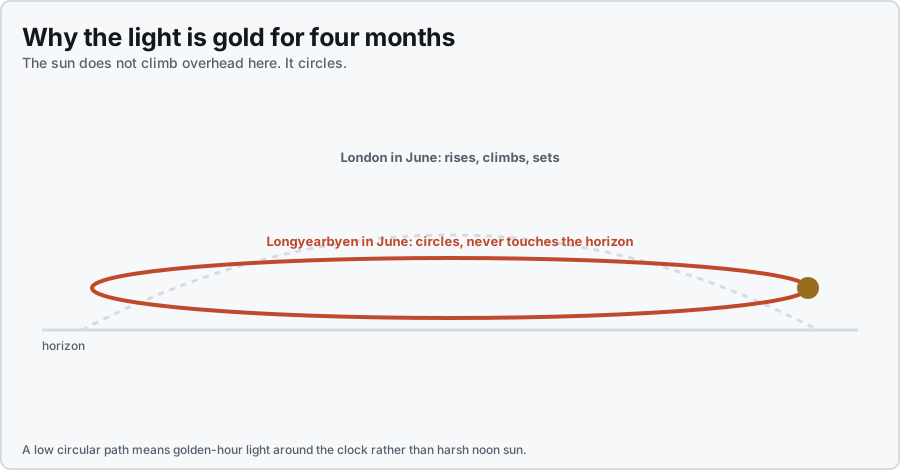
Not a long evening. The sun goes round the sky in a circle and never touches the horizon for four months.
 Verified by Lars Hansen, Norway tour specialist covering Arctic Norway and Svalbard
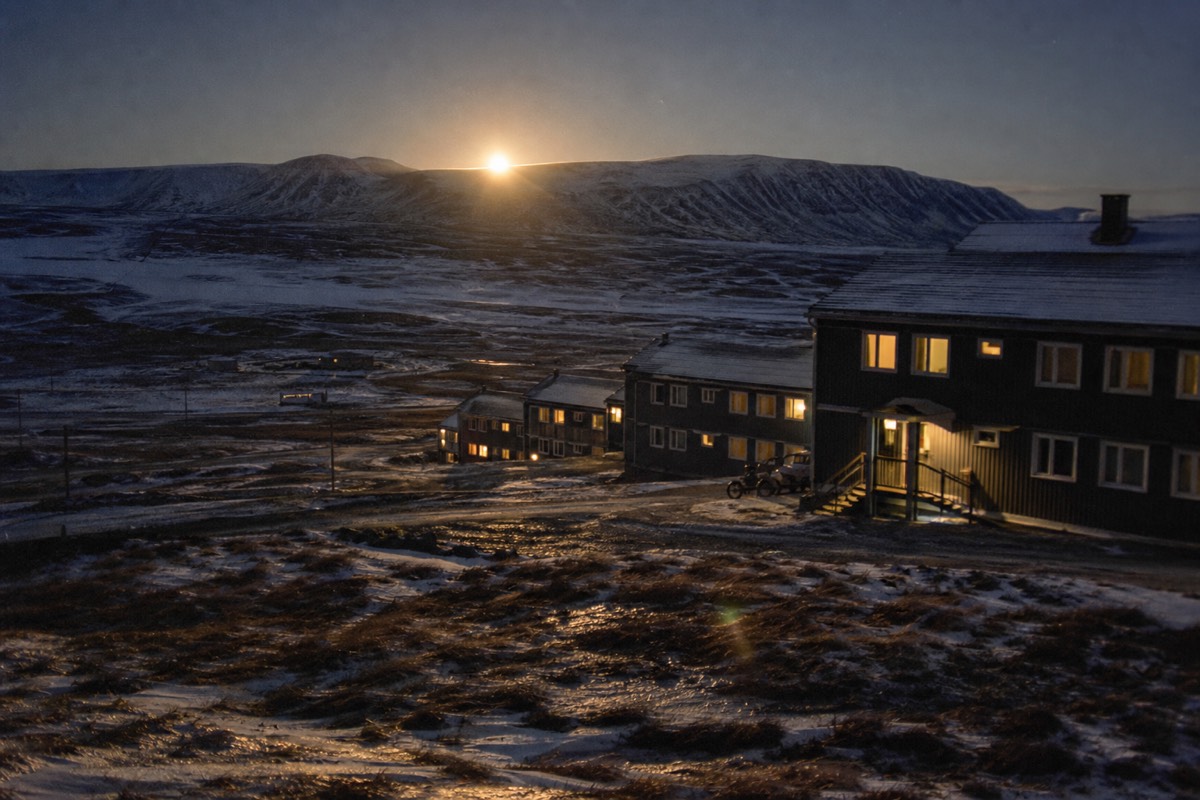
Short answer
The sun stays above the horizon at Longyearbyen from about 20 April to 22 or 23 August, roughly four months of continuous daylight. Because it circles low rather than climbing overhead, the light stays golden around the clock rather than turning harsh at noon. Boats, hiking, wildlife and photography tours all run in this window, and no aurora is possible at any point during it.
The first surprise about midnight sun is not the brightness. It is the angle. The sun does not rise and set in an arc, it travels around you in a low circle, so at four in the afternoon and four in the morning the light hits the mountains from opposite sides at almost identical height. Photographers understand immediately why this matters. Everyone else works it out around day two, usually at about 1am, when they realise they are not tired.
When is the midnight sun in Svalbard?
The sun stays above the horizon at Longyearbyen from about 20 April to 22 or 23 August, which is roughly four months of continuous daylight. The wider bright season starts earlier and ends later, but that is the window when the sun genuinely never sets.
| Phase | Dates at Longyearbyen | What it looks like |
|---|---|---|
| Sun returns after polar night | About 29 January | Brief daylight, growing fast |
| Sunny winter | 1 Mar to 19 Apr | Full daylight on deep snow, low sun, hard shadows |
| Midnight sun begins | About 20 April | The sun stops setting |
| Peak midnight sun | May to July | Continuous daylight, no darkness of any kind |
| Midnight sun ends | About 22 or 23 August | The sun dips below the horizon again |
| Golden autumn | 24 Aug to 30 Sep | Real nights return, tundra turns colour, first aurora |
These are Visit Svalbard's own season dates, which we use consistently across this site. They shift by a day or so year to year.
What can you do under the midnight sun?
Boats to Pyramiden and Barentsburg, hiking, wildlife days, photography and the town tours. Five of the eight categories on this site run in this window, and three of them run only in it. Snowmobiles stop around mid-May when the snow goes, and ice caves close before that.
The category that gains most is boats. The nine-hour run to Pyramiden is the one people build the trip around, 4.6 with its reviewers and capped at eight, so check availability here early in the season. Isfjorden clears of ice around late May and the whole summer programme depends on it, from a 1.5-hour scenic cruise to the nine-hour day north to the Pyramiden ghost town.
| Category | Runs under midnight sun? | Notes |
|---|---|---|
| Boat tours and fjord cruises | Yes, this is the whole season | Late May to late September |
| Hiking and glacier walks | Yes | Snow-free routes from about June |
| Wildlife | Yes, at its best | Bird cliffs from late May to mid-August, reindeer everywhere |
| Photography | Yes, a specific programme | Midnight shoots, low gold light around the clock |
| Longyearbyen town, mine, Seed Vault | Yes, all year | The reliable backup |
| Snowmobile | Only until about mid-May | Ends when the snow does |
| Ice caves | No | Closed by spring meltwater |
| Northern lights | No, impossible | There is no darkness to see them against |
Two listings exist specifically for the light: a three-hour midnight sun hike to a viewpoint above the Seed Vault, rated 4.7 by its reviewers, and a midnight sun photo tour at $151. If the hike is the one you want, you can check live availability and prices on GetYourGuide, and both sit on the photography tours page alongside the winter equivalents.
What does continuous daylight do to you?
It removes every time cue you rely on, which is more disruptive than it sounds. People stay up far later than intended, wake at odd hours, and lose track of what day it is. Blackout curtains are standard in Longyearbyen accommodation and an eye mask is worth packing regardless.
Temperatures do not follow the light: check the live Longyearbyen forecast before packing for a July trip. Practical effects worth planning around:
- You will not feel tired at midnight. This is fine for one night and cumulative over four.
- Book morning tours anyway. They still leave at nine, and oversleeping is the commonest reason people miss them.
- Meals drift. Restaurants keep normal hours; your appetite will not.
- Sunburn is real. Snow and water reflect, the sun is up permanently, and people underestimate it badly in May and June. Sunglasses and sunscreen genuinely matter.
- The best light is when everyone is asleep. Between about 11pm and 3am the town empties and the mountains go gold. If you are here to photograph, sleep in the afternoon.
Is midnight sun better than winter in Svalbard?
Neither is better, they are different trips. Summer gives you the boats, the bird cliffs, the reindeer and light around the clock. Winter gives you snowmobiles, ice caves and the aurora. The mistake is booking one while imagining elements of the other.
| Midnight sun, late Apr to late Aug | Winter, Nov to Apr | |
|---|---|---|
| Signature activity | Boat day to Pyramiden | Snowmobile with an ice cave |
| Aurora | Impossible | The reason many people come |
| Wildlife | Best of the year, especially birds | Reindeer and fox only |
| Landscape | Green-brown tundra, blue water, snow on the tops | White, unbroken |
| Warmth | +3 to +7 °C | -16 to -6 °C |
| Daylight for activities | Unlimited | None in December, plenty by March |
| Categories running | 5 | 4 to 5 |
If you cannot decide, the best time to visit guide works through it properly and the month-by-month table shows exactly what is bookable when.
When exactly is the best week of the summer?
Early to mid-July. The fjord is reliably clear, the bird cliffs are at their fullest, reindeer calves are out, and the light is still unambiguously midnight sun. It is also the busiest and most expensive week, and the Pyramiden boat sells out from abroad months ahead.
Late August into September is the quiet alternative. You lose the very peak of the bird season and gain autumn colour on the tundra, softer prices, and from around the third week of September the first aurora of the year while the boats are still running. It is the only window where both are possible.
Common questions about the midnight sun
Can you sleep during the midnight sun?
Yes, with help. Accommodation in Longyearbyen comes with blackout curtains as standard because residents need them too, but an eye mask is worth packing in case yours are thin. The bigger problem is not falling asleep but wanting to: with the sun up at midnight, most visitors simply stay out far later than they planned and pay for it the next morning.
Is it warm during the midnight sun?
No. Typical July temperatures in Longyearbyen run between +3 and +7 degrees Celsius, and it is colder on the water. Continuous daylight at 78 degrees north does not translate into warmth, because the sun is always low. Pack as you would for a cold British winter day and add a windproof layer, since there is nothing to shelter behind.
Can you see the northern lights in summer in Svalbard?
No, not at all, between roughly 20 April and 22 August. The aurora is still occurring but there is no darkness to see it against. Any listing suggesting otherwise for those months is misdescribing itself. The season starts again in late October, as the aurora guide sets out.
Do I need sunglasses and sunscreen in Svalbard?
More than you would expect. Snow and water reflect strongly, the sun never goes away to give your skin a break, and people regularly come back from a May or June boat day burned. Sunglasses are also genuinely useful against glare on snow in April, when the light is at its harshest.
What is the best time of day to photograph in the midnight sun?
Between about 11pm and 3am, when the sun is at its lowest point on its circle and the town has emptied. The light is the same quality as sunset but lasts for hours rather than minutes, which is the actual gift of this season. The photography tours that run at those hours exist precisely because guides know it.
Plan your tour
Book the trips that only exist under this light
Initial editorial choice, not a personalized eligibility check. Confirm the operator’s full requirements before booking.
Choose how you use the light
This screens only the season, the time window and the pick you choose, using each listing’s published duration and season. Health, fitness, language, licence and every remaining requirement still need operator confirmation, and travel to the meeting point is not included in the durations.
- Midnight sun hike & Global Seed Vault: A three-hour evening hike to the Seed Vault under the midnight sun, the highest-rated of the summer night walks. 3 hours Midnight-sun season only, roughly late April to August.
- Pyramiden & Nordenskiöld Glacier boat tour: The full Isfjorden crossing to the Soviet ghost town of Pyramiden with the Nordenskiöld glacier front on the way, in one day. 9 hours Nine hours door to door and summer-only while Isfjorden is ice-free; a long day that depends on sea state.
- Midnight sun photo tour & Seed Vault: Three photo hours under a sun that does not set, routed past the Seed Vault. 3 hours Runs in the midnight-sun window only.
Midnight sun hike & Global Seed Vault
Have your travel date in mind? Check it before arranging the rest of your day. A three-hour evening hike to the Seed Vault under the midnight sun, the highest-rated of the summer night walks.
3 hours
Midnight-sun season only, roughly late April to August.
Listings loaded by GetYourGuide. If they do not load, browse Svalbard listings on GetYourGuide.Check your date on GetYourGuide